HONOURING THE LUMBER JILLS
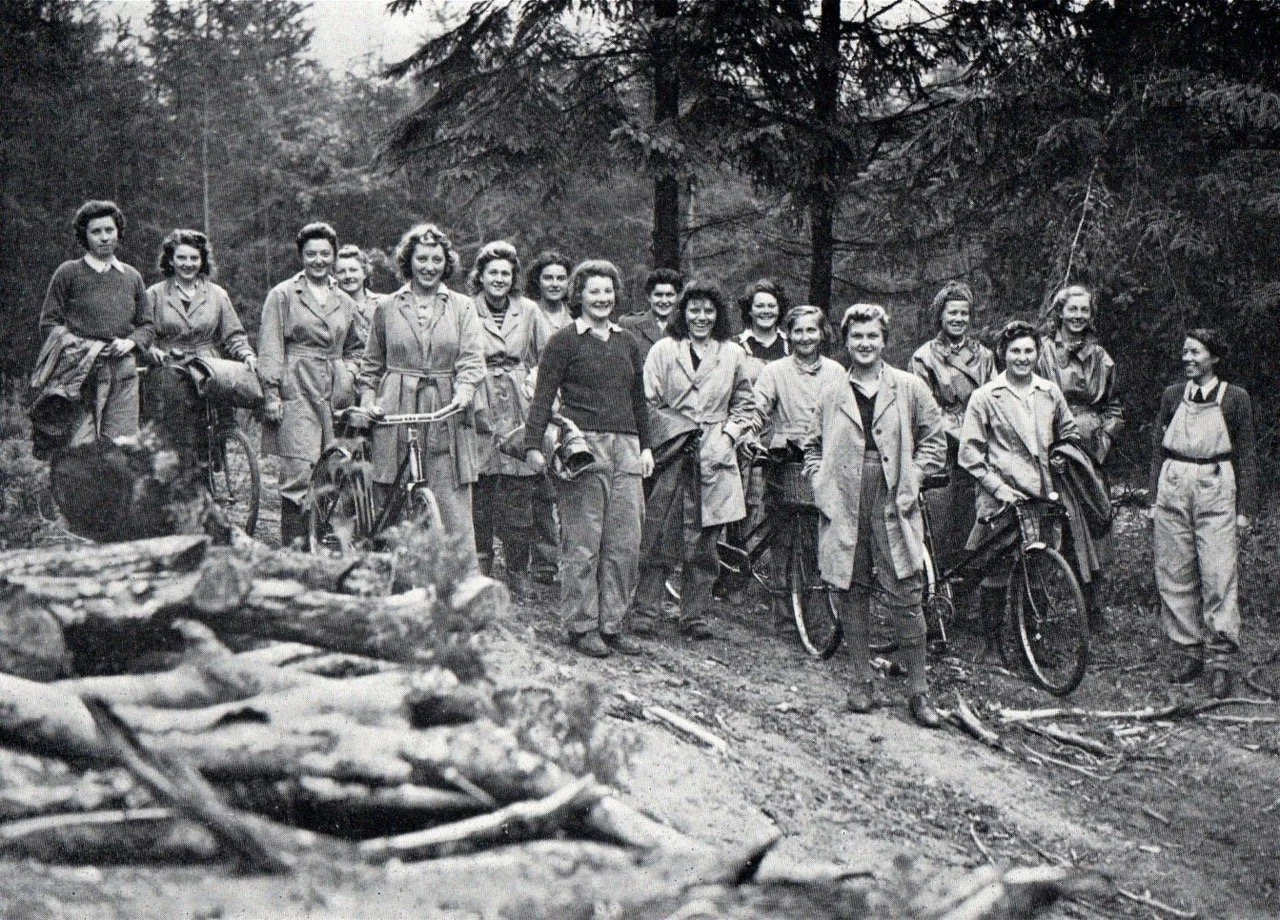
Lumber Jills with their bikes in the Forest of Dean
Hey! Nic here with story time.
Back in 2023, I went to an exhibition all about the Lumber Jills in Grizedale Forest. It was awesome. I’d never heard of these women before, supporting the war effort by stepping in to the shoes of men who had been sent to war
I read about how they cycled miles to and from the Forest, often because locals were reluctant to give lodgings to women doing mens work!
See photo of me at the exhibition below. I’d spent 2 nights camping in a field for Sisters in the Wild and I was riddled with ticks (the unwashed hair was the least of my worries).
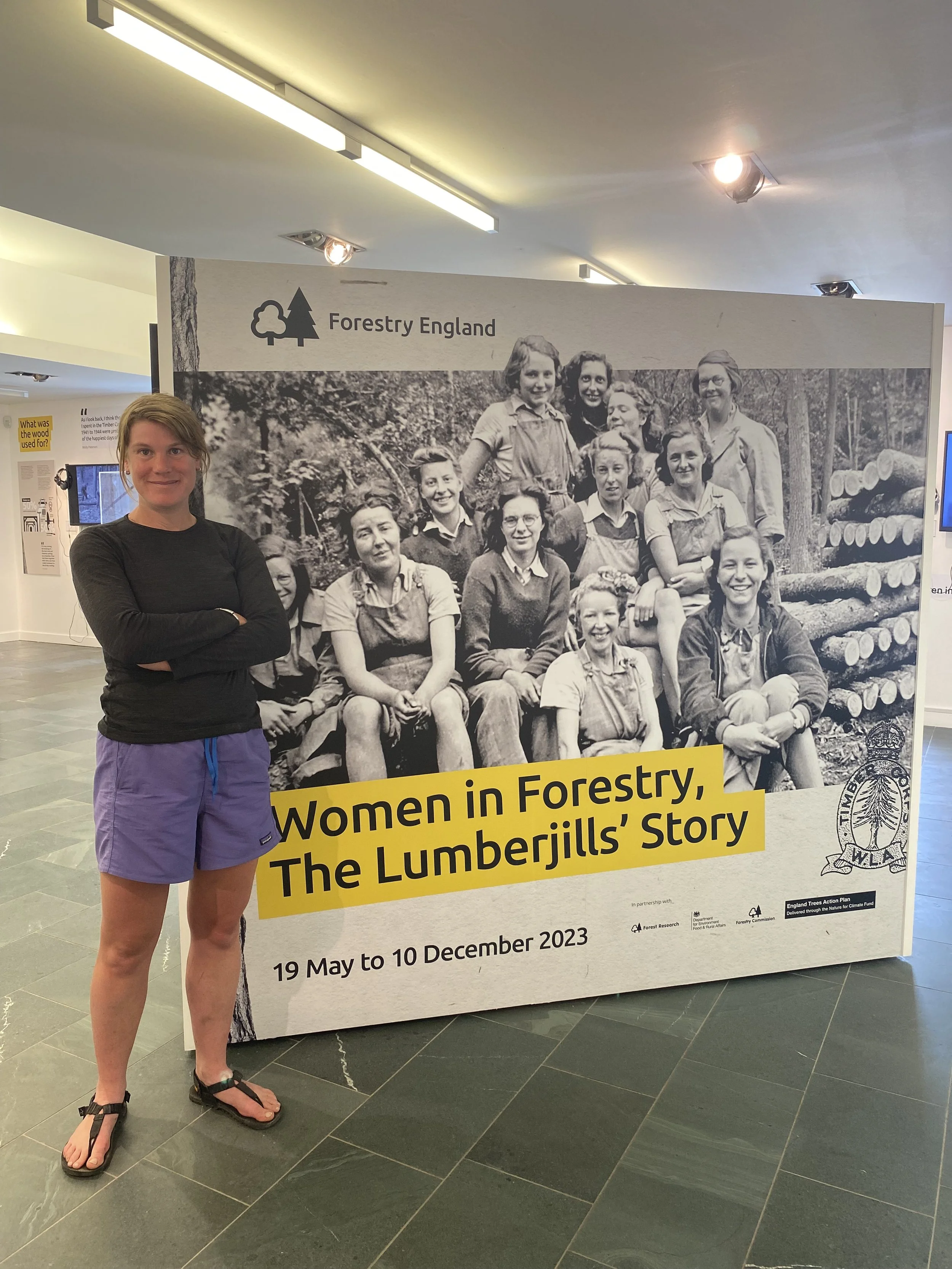
Riddled with ticks but happy at the Lumber Jill exhibition.
I fell in to a bit of a hyper focus, reading books written by Joanna Foat, the curator of the exhibition. I’d been asked to host a quiz for Sisters in the Wild and I made a round all about the Lumber Jills. I got feedback that the questions were quite specific and very hard. (The quiz questions I used can be found at the end of this blog post for any one interested).
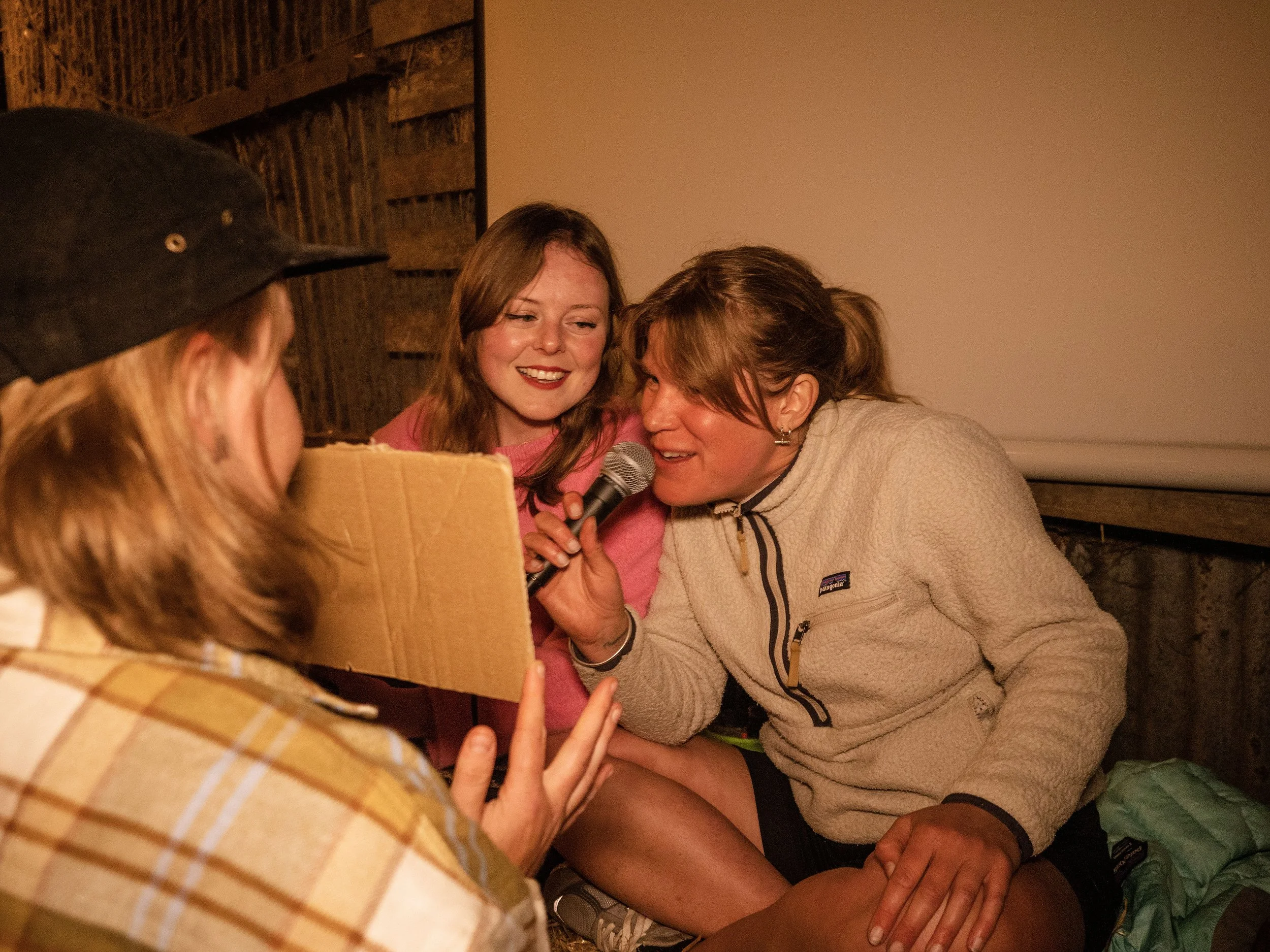
Me and my mate Abby hosting the quiz at Sisters in the Wild
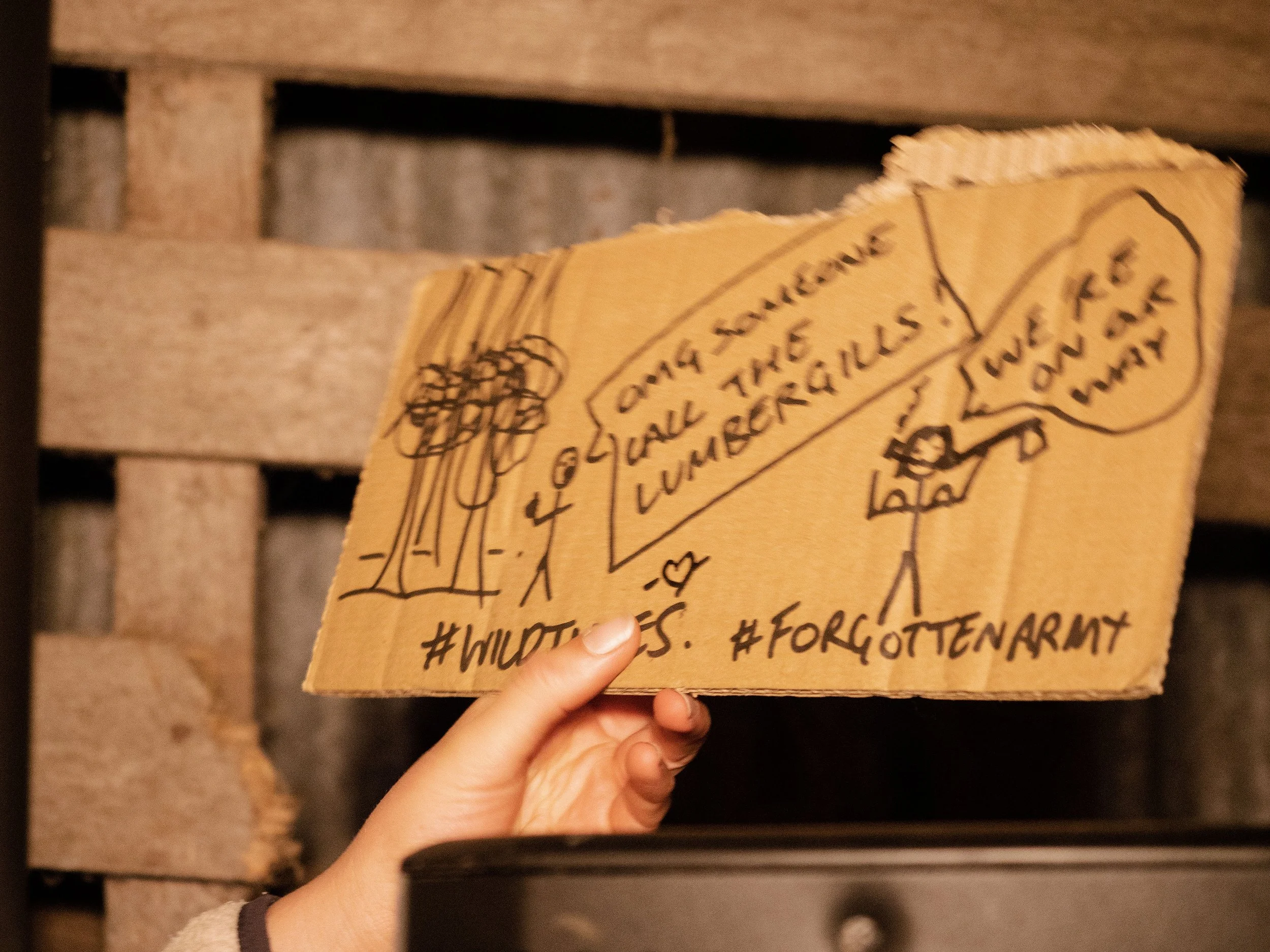
It was so much fun! More quizzes at bike events please
WHO EVEN WERE THE LUMBER JILLS?
The “Lumberjills” were women who worked in Britain’s forests during the Second World War as part of the Women's Timber Corps.
While many men were away fighting, Britain desperately needed timber for the war effort. Wood was essential for things like:
building military infrastructure like pit props
railway sleepers
telegraph poles
crates and packaging
aircraft components
The women of the Timber Corps stepped into a job that was physically demanding and traditionally male-dominated. They felled trees, operated saws, drove tractors and trucks, planted woodland, managed forests, and worked in all weather conditions.
The nickname “Lumberjills” was inspired by “lumberjacks,” although many women reportedly disliked the term at the time because they wanted to be taken seriously as skilled forestry workers.
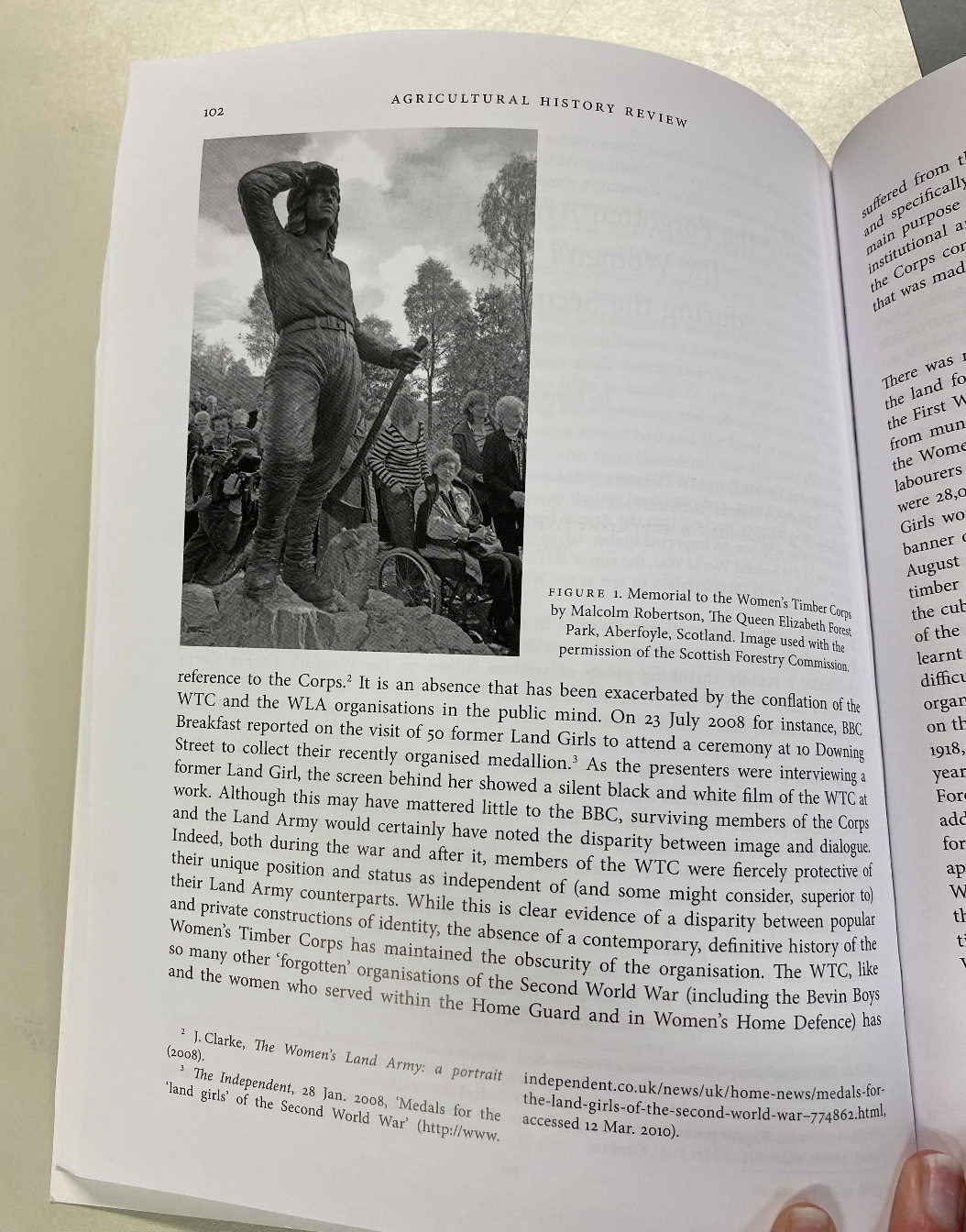
The Lumber Jill memorial in Aberfoyle
In places like the New Forest, Lumberjills played a hugely important role. The New Forest was a major timber resource during the war, and many women worked among its wartime sawmills and forestry enclosures. Bicycles were often their main mode of transport, with workers travelling between camps, woodland sites, and villages carrying tools and supplies.
The tracks we cycle on our social rides, were once ridden by teams of women, on their way to various sites around the Forest. Imagine, one minute, your wearing dresses and working in your local corner shop. Next minute, the country is at war, all the men have gone away and you get to hang out in the outdoors, with loads of other women, camping and doing physical work. Mad.
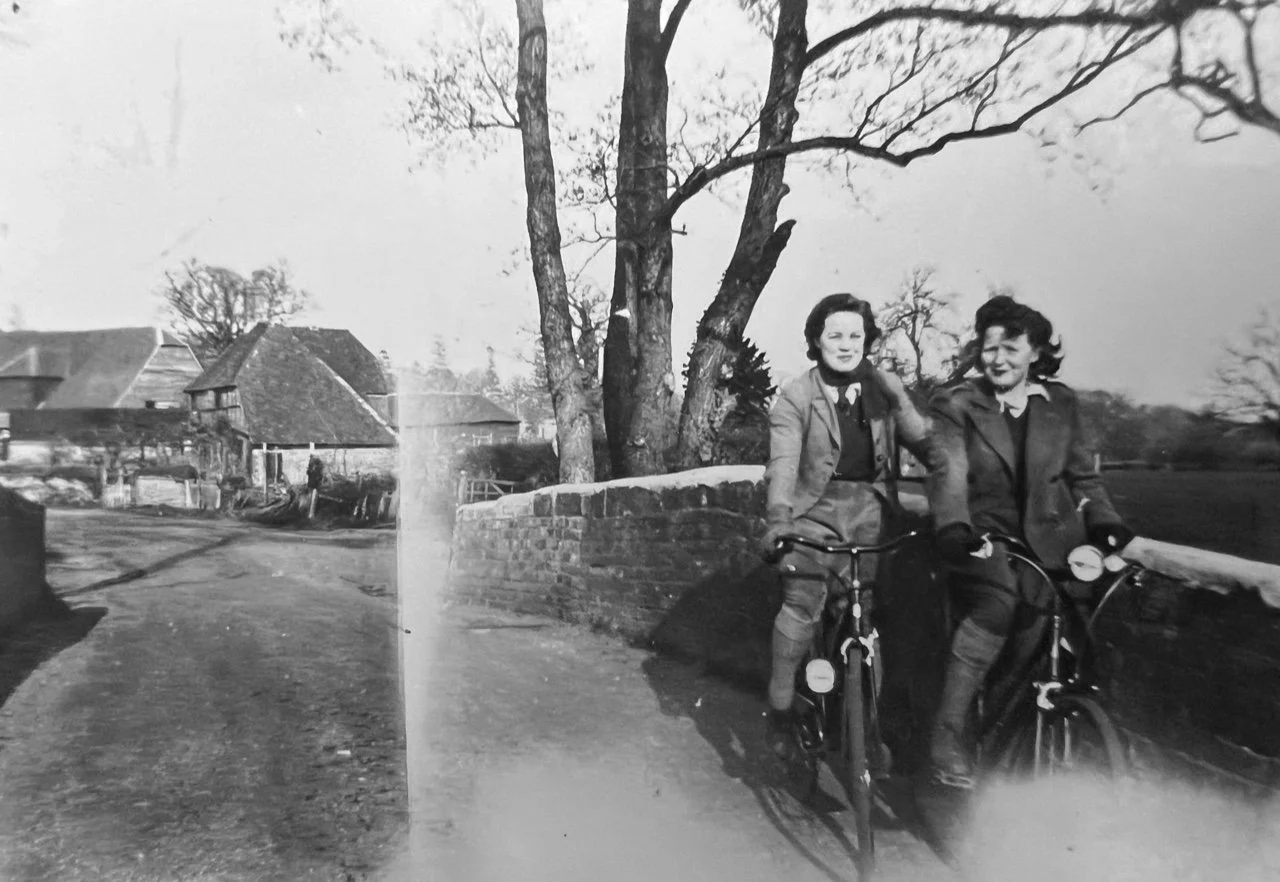
Heather Rumsby Collection
I came back from the Lake District and straight away asked Angus, the Director of the Lyndhurst Heritage Centre if they could host the exhibition.
Whilst Angus knew of Joanna Foat as she’d been speaking at various local history events around the country, the exhibition itself wasn’t on the cards.
So, Sue and I threw ourselves in to researching in the hope that we could design a guided ride that would honour the Lumber Jills and the places they lived and worked in the New Forest.
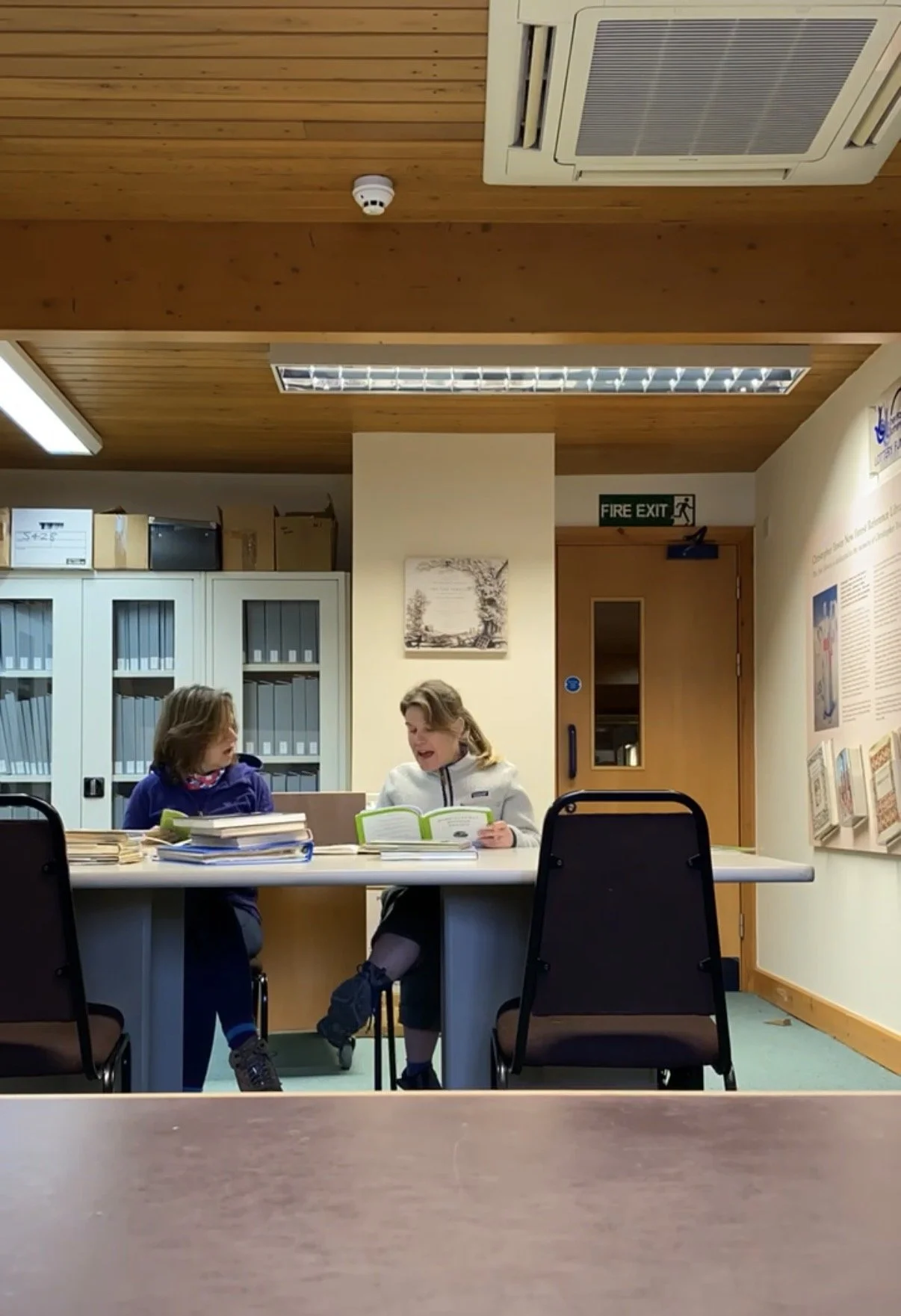
Sue and I at the Heritage Centre in Lyndhurst (which is excellent) raiding the archives.
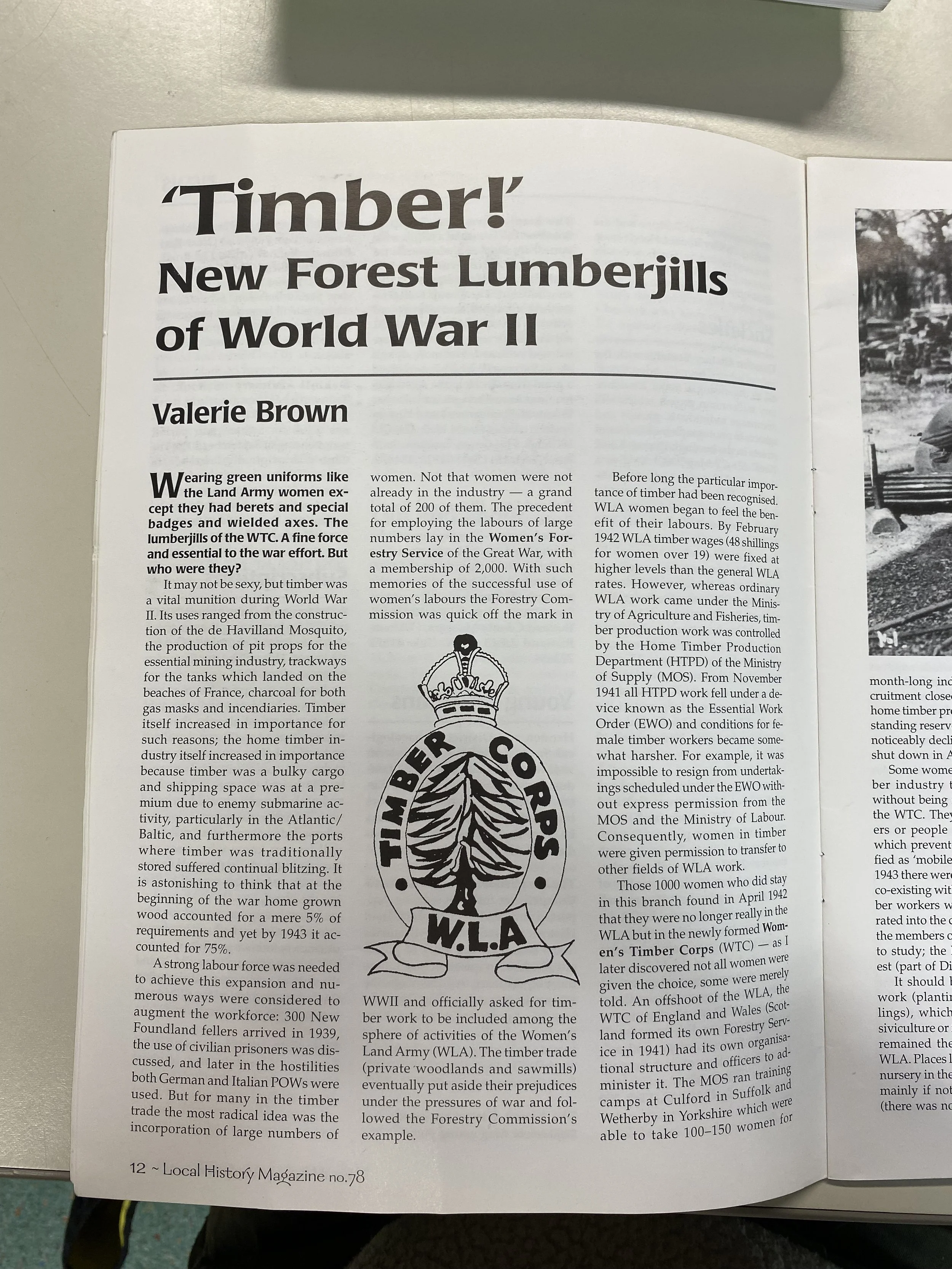
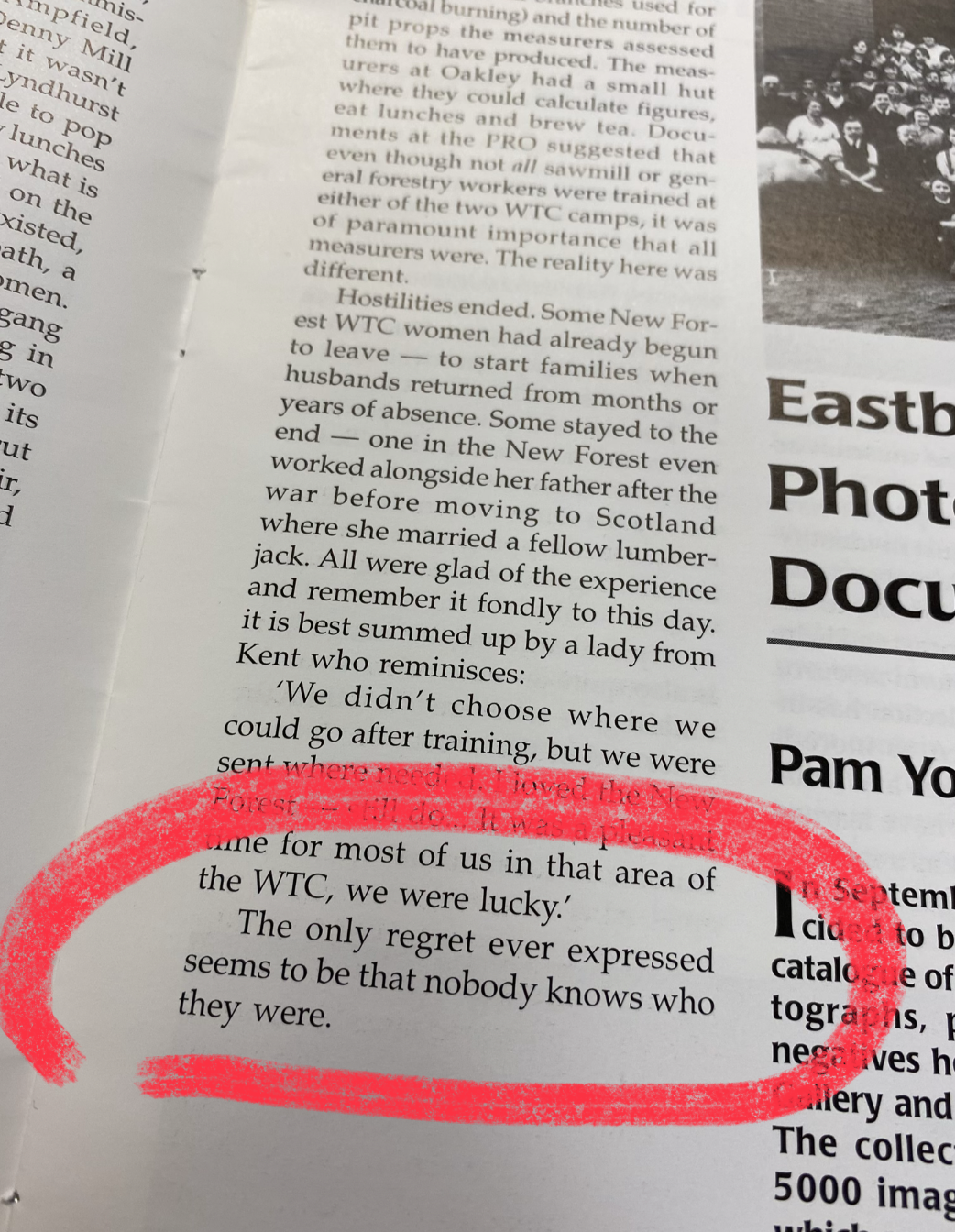
We found some very interesting texts
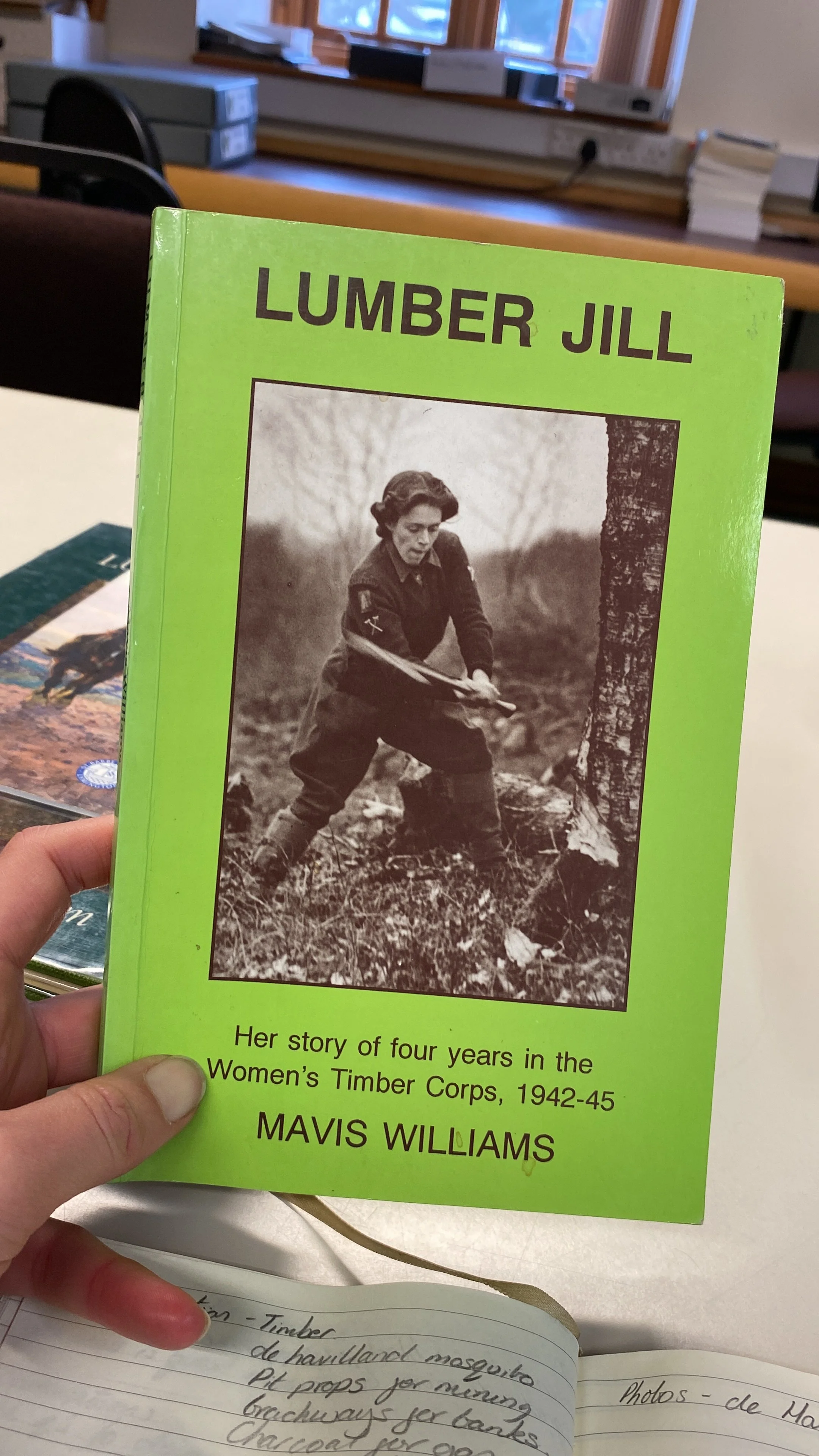
We knew from the photos that we’d have been Lumber Jills
Any way, that was back in 2023 and I’m sorry to say that we never did get round to designing that guided ride. Life happened, I got a new job that required more of my time and head space (I head up the New Forest tourist board now would you believe!), Sue got a new hip etc etc.
BUT! A couple of months ago we learnt that the exhibition is fiiiinally coming to the Forest!
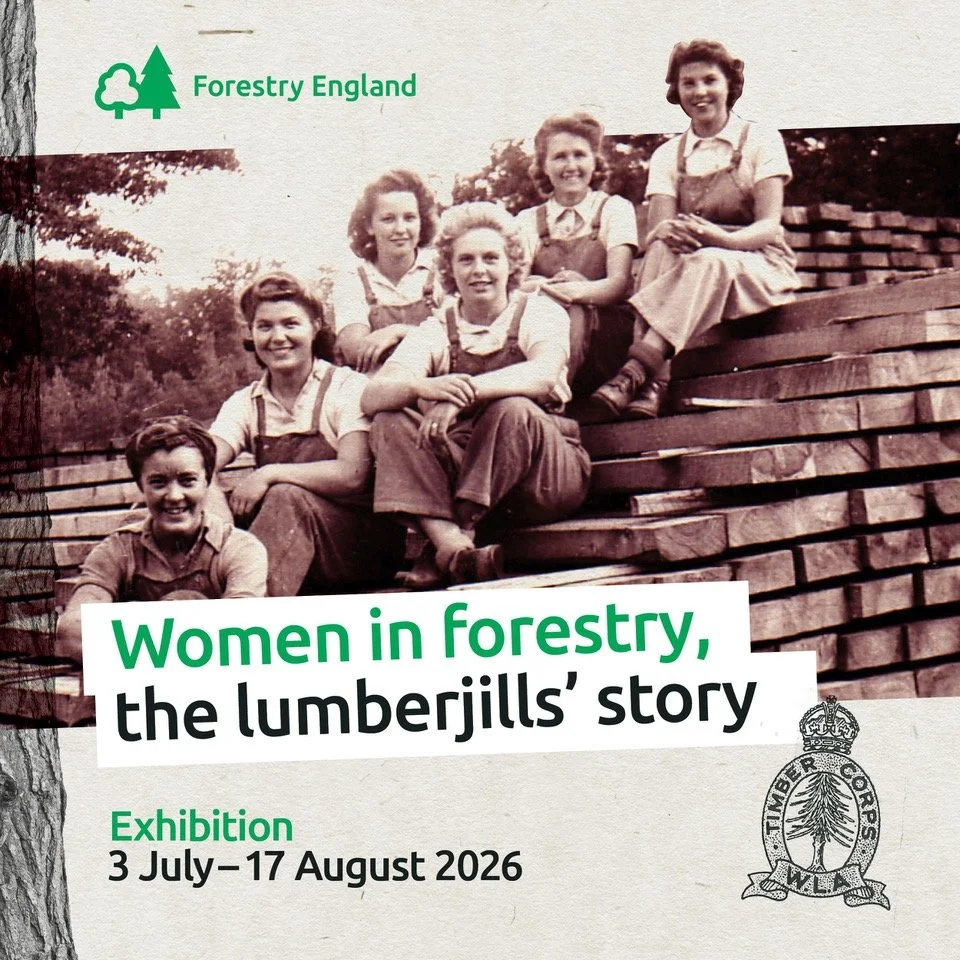
At the Lyndhurst Heritage Centre!
Sue emailed Jo straight away and asked if we could collaborate on a ride, driving footfall to the exhibition and following in the the tyre marks of the Lumber Jills by going to where they worked. Jo said yes!
If you too, love hearing about forgotten womens’ history, love being outside on bikes with people, and love understanding more about where you live, you really should get the 4th of July in the diary.
Book your space on the ride here.
This might be my favourite New Forest Off Road Club event we’ve ever done. It certainly feels like the most important ‘cos guess what? Despite all their hard work, the Lumber Jills have never been recognised for their service. They were never allowed to take part in memorial Sunday, walking past the Cenotaph. Heartbreaking.
We believe women should be paid for their time so whilst this is a social ride, we’re asking people to donate so that we can pay Jo. Massive thanks in advance for your contributions.
If you’ve been thinking of joining us and haven’t managed to yet, may I suggest this is the ride. We’ll be stopping and starting loads so Jo can tell us facts and stories.
We actively encourage Lumber Jill inspired dress up, get out your dungarees and neckerchiefs as modelled by Jo and her crew at the New Forest Show below.
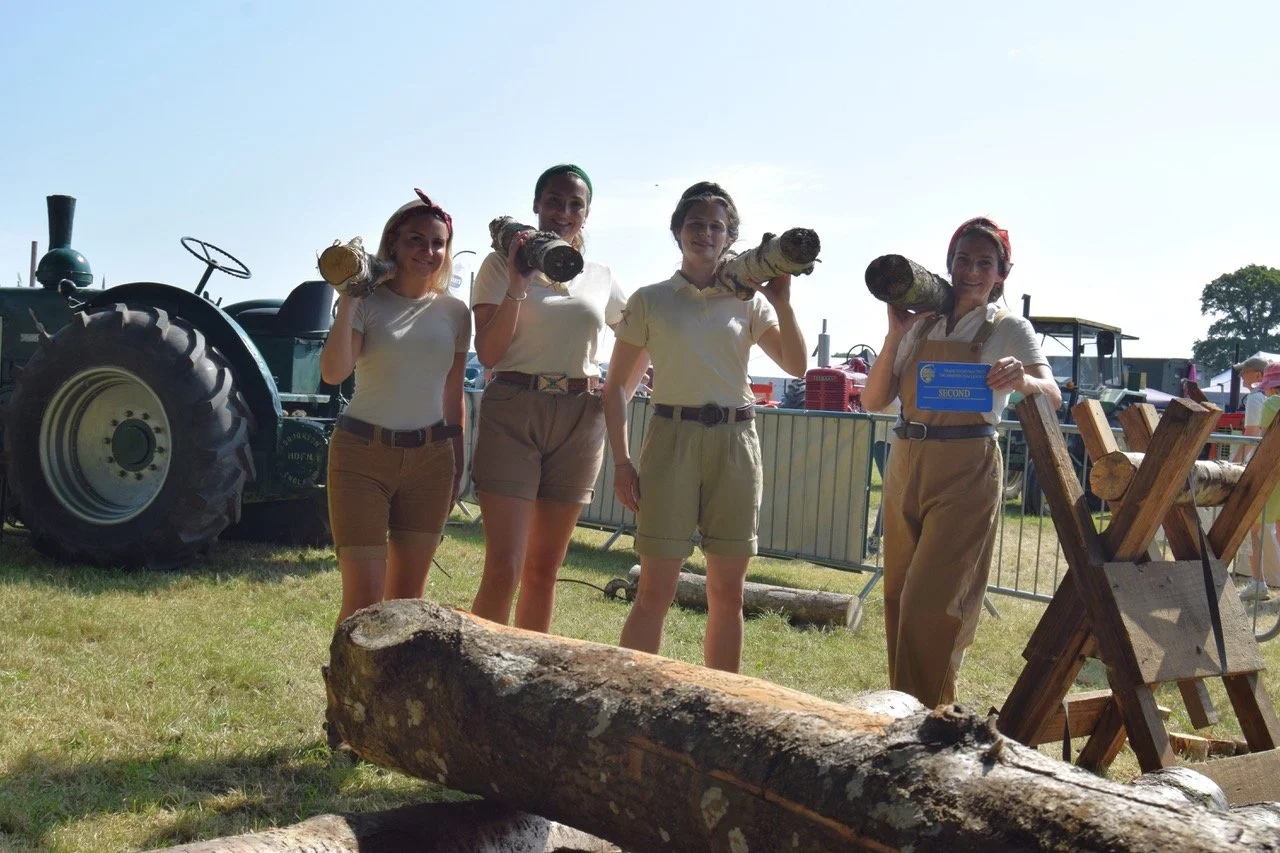
Jo Foat and Lumber Jills at the New Forest Show
LEARN ABOUT THE LUMBER JILLS
QUIZ TIME
ROUND 5: the Lumber Jills
1: By the end of the Second World War, how many women aged between 17 - 24 were in the women’s timber corps?
18,000
2: before the second world war, what percentage of britains wood, came from overseas?
96 percent
3: when the Second World War started, how many months of wood did Britain have in its stock pile?
7
4: in what year were women encouraged to join the war effort and enlist to be part of the women’s timber corps?
1942
5: in what Scottish forest can you find the only memorial to the lumber jills?
Aberfoyle
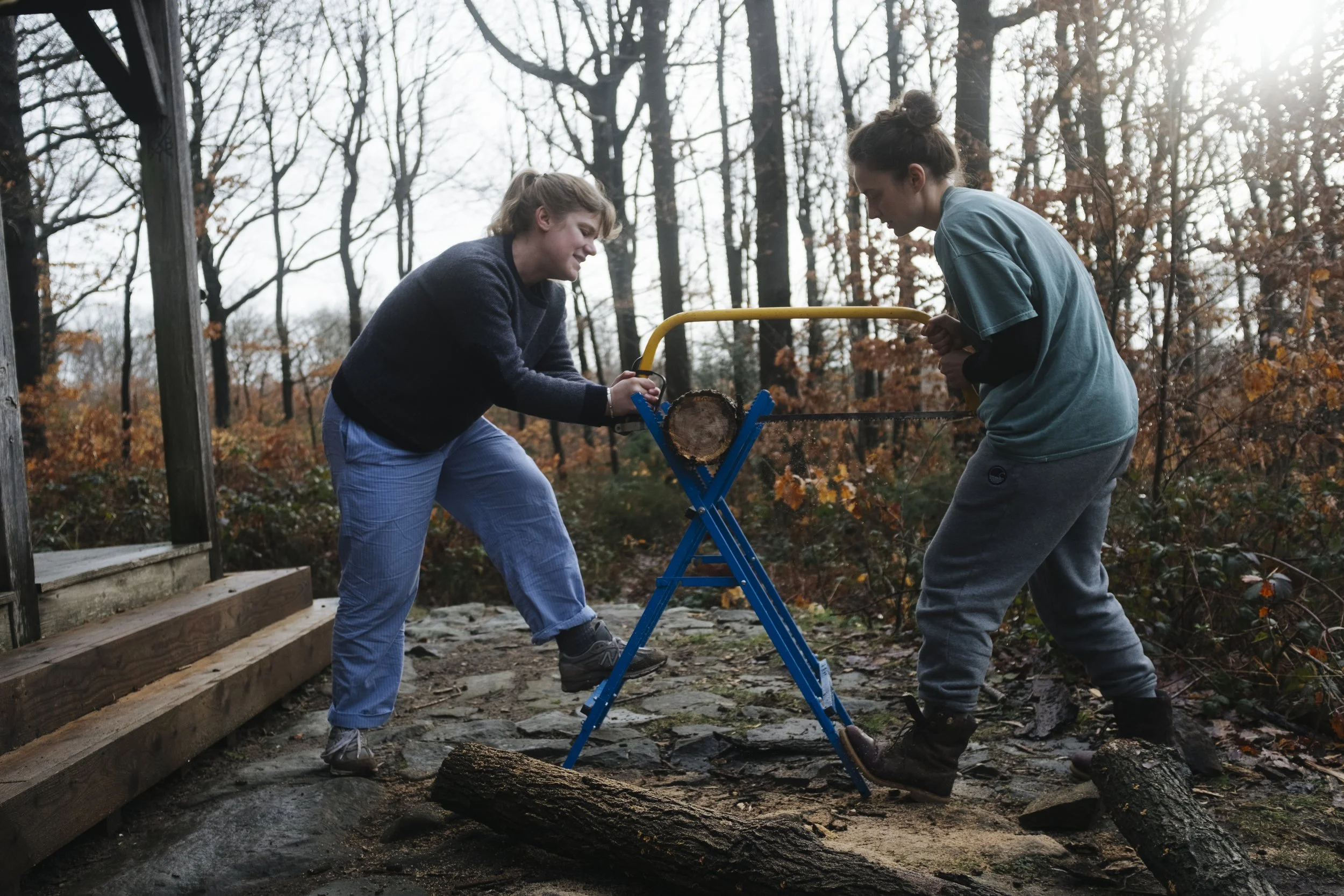
A photo of me and my pal Molly pretending to be Lumberjills.
IMPORTANT NOTE
The New Forest Off Road Club celebrating the Lumber Jills and acknowledging their contribution to the war effort should not be misinterpreted with glorifying war.
Through out history, wars have been and continue to be caused by unhealed men in power. Women are disproportionately impacted in all wars.